


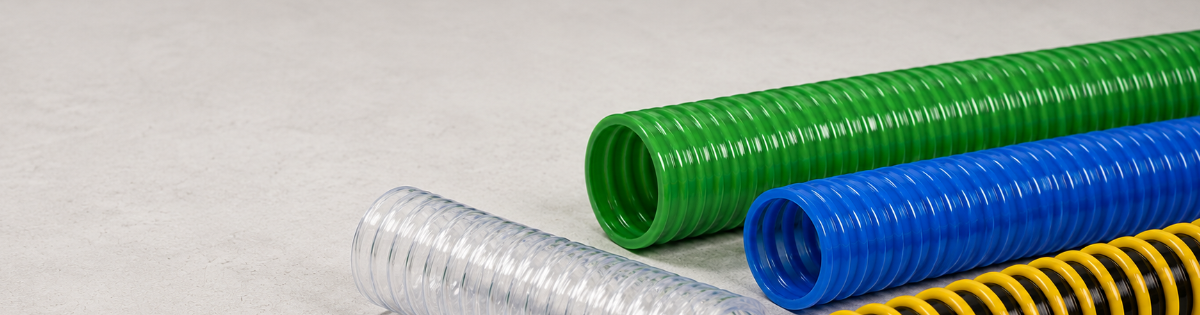
How to Choose the Right Suction Hose
Choose suction hose by checking the liquid being moved, the pump inlet size, the required flexibility and the working conditions.
Quick rule: use suction hose on the inlet side of a pump. Use layflat delivery hose on the discharge side.
What to Check Before Ordering
- Match the hose inside diameter to the pump inlet and fittings
- Check that the hose is rated for suction and will resist collapsing under vacuum
- Confirm the hose is compatible with the liquid being transferred
- Check the working pressure, temperature and required length
- Consider how flexible the hose needs to be during use
- Use a strainer where debris may enter the suction line
Which Suction Hose Should I Choose?
| Hose Type | Best For | Main Difference | Useful Links |
|---|---|---|---|
| Reinforced Suction Hose | Water pumps, drainage, irrigation and general water transfer | The standard all-round option. Spiral reinforcement helps prevent the hose collapsing while the pump is drawing water. | Reinforced Suction Hose |
| Oil Suction Hose | Oil, diesel, fuel and compatible hydrocarbon transfer | Made from oil-resistant materials. Choose this instead of standard water suction hose when transferring petroleum-based fluids. | Oil Suction Hose |
| Super Elastic Medium Duty Suction Hose | Portable pumps, site dewatering, dirty water and jobs requiring easier hose routing | More flexible and easier to position around equipment and obstacles while still resisting kinking and vacuum collapse. | Super Elastic Suction Hose |
| Tiger Tail Sanitation Hose | Effluent, sanitation, cesspool and waste-liquid transfer | A specialist sanitation hose designed for waste and effluent work, with a durable ribbed exterior and cuffed ends. | Tiger Tail Sanitation Hose |
In simple terms: use reinforced suction hose for general water pumping, oil suction hose for fuel and oil, super elastic hose where easier handling matters, and Tiger Tail hose for sanitation and effluent work.
Other Parts You May Need
| Job | Recommended Part | Useful Links |
|---|---|---|
| Connect the hose to a pump | Pump coupling or hose tail | Pump Couplings & Fittings |
| Secure the hose to a fitting | Correctly sized hose clip or wide-band clamp | Hose Clips & Clamps |
| Prevent debris entering the pump | Hose strainer | Hose Strainers |
| Discharge water from the pump | Layflat delivery hose | Layflat Delivery Hose |
| Filter soil and sediment from discharged water | Sediment filter bag | Strainers & Filter Bags |
Common Mistakes
- Using layflat delivery hose on the suction side of a pump
- Choosing hose by outside diameter instead of inside diameter
- Using hose that is too small for the pump inlet
- Using standard water suction hose for fuel, oil or chemicals
- Ignoring the hose pressure or temperature rating
- Running in dirty water without a suitable strainer
Quick Q&A
What is the difference between the suction hose types?
Reinforced suction hose is the general choice for water pumping. Oil suction hose is intended for compatible fuels and oils. Super elastic hose is easier to route and handle, while Tiger Tail hose is designed for sanitation and effluent work.
Can I use layflat hose on the suction side of a pump?
No. Layflat hose is intended for discharge and can collapse under suction. Use reinforced suction hose on the pump inlet.
What size suction hose should I use?
Match the hose inside diameter to the pump inlet and fittings. A smaller hose can restrict flow and reduce pump performance.
Does suction hose need to be reinforced?
Yes. Reinforcement helps the hose resist collapsing when the pump creates a vacuum.
Do I need a strainer on the suction hose?
Use a strainer when pumping from ponds, tanks, drains or other sources where stones, leaves or debris could enter the hose.
Can the same suction hose be used for water, fuel and chemicals?
No. Always check the hose material and specification against the liquid being transferred. Water suction hose should not automatically be used for fuel, oil or chemicals.


