


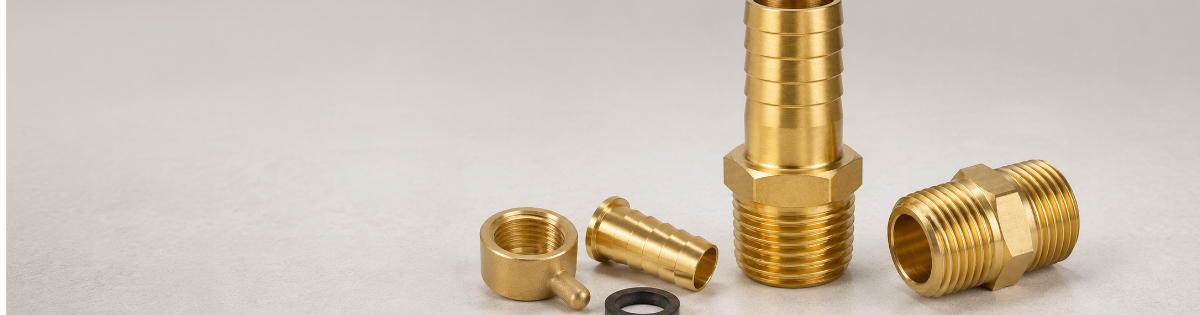
When Should You Use Brass Hose Fittings?
Brass hose fittings are commonly used for joining, adapting and connecting hose and pipework. They are a popular choice for water, air and general workshop applications because they are strong, easy to work with and suitable for many everyday jobs.
They are not always the right answer for every system though. The fitting still needs to match the hose, thread size, pressure, fluid and working environment.
Quick rule: use brass hose fittings where you need a reliable general-purpose metal fitting, but always check the thread size, hose size, pressure and application before ordering.
What Are Brass Hose Fittings Used For?
Brass hose fittings are used to connect hoses to taps, pumps, pipework, valves, tanks and other fittings. They can include hose tails, threaded adaptors, joiners, couplings, reducers and connectors.
They are often used where a plastic fitting may not be strong enough, but where stainless steel or specialist fittings are not needed.
When Brass Fittings Are a Good Choice
Brass is useful for many general hose and pipe jobs. It is strong enough for regular workshop use and is normally straightforward to fit with the correct thread and sealing method.
| Application | Why Brass Can Work Well | What to Check |
|---|---|---|
| Water hose connections | Brass is commonly used for water handling and general hose connections. | Check hose size, thread size and whether a washer or thread seal is needed. |
| Workshop air lines | Brass fittings are often used for general air and low to medium duty workshop connections. | Check the pressure rating and make sure the fitting suits the hose or airline. |
| Hose tails and adaptors | Brass hose tails give a strong connection point between hose and threaded fittings. | Match the hose internal diameter and use the correct hose clip if required. |
| Pumps and water equipment | Brass can be suitable for connecting hoses, taps, valves and pump fittings. | Check the thread type, sealing method and water source. |
| General repair work | Brass is useful for adapting or replacing damaged hose connections. | Do not rely on appearance alone. Check size and thread properly. |
Why Use Brass Instead of Plastic?
Plastic fittings can be suitable for some light-duty or chemical applications, but brass is often preferred where a stronger or more durable fitting is needed.
Brass can handle regular tightening, workshop handling and general site use better than many plastic fittings. It is also less likely to crack if it is knocked or over-tightened slightly, although it can still be damaged if forced.
Why Use Brass Instead of Malleable Iron?
Brass and malleable iron fittings are used for different jobs. Brass is often chosen for general hose connections, water fittings and smaller adaptors where a clean, corrosion-resistant fitting is useful.
Malleable iron is normally used more for threaded pipework and heavier-duty pipe fitting applications. If the job is mainly hose connection, brass is often the more common choice.
Do Brass Fittings Need Sealing?
Some brass fittings seal with a washer, some seal on the thread, and some seal against another face or fitting. The correct sealing method depends on the fitting style.
If the fitting uses a washer, make sure the washer is present and in good condition. If the fitting seals on the thread, suitable thread sealing tape or compound may be needed.
Do not over-tighten brass fittings. Over-tightening can damage threads, crush washers or split fittings. Tighten enough to seal, then check for leaks.
When Brass May Not Be the Best Choice
Brass is a good general-purpose material, but it is not right for every application.
| Situation | Why to Check Carefully | Possible Alternative |
|---|---|---|
| High-pressure hydraulic systems | Hydraulic systems need fittings rated for the pressure and fluid type. | Use the correct hydraulic fitting or coupling. |
| Corrosive chemicals | Some chemicals may not be suitable for brass. | Check compatibility and consider plastic or stainless steel where suitable. |
| Heavy threaded pipework | Some pipework may be better suited to malleable iron fittings. | Use malleable iron where the pipework application calls for it. |
| Food, drinking water or specialist systems | Material suitability and approvals may matter. | Check the exact application requirements before ordering. |
Find the Right Brass Hose Fitting
Browse our brass fittings and hose connections to find the right size and style for the job.
Browse Brass Couplings & Fittings Open a Trade Account


