


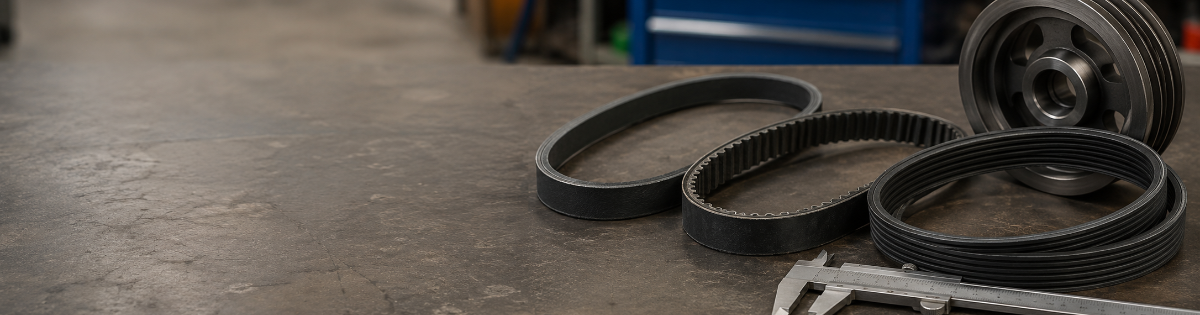
How to Identify the Right Drive Belt
How to Identify the Right Drive Belt
Drive belts are used across plant machinery, garden machinery, workshop equipment, generators, pumps, compressors and other driven machinery. When a belt fails, the machine is often down until the correct replacement is fitted.
The tricky part is that many belts look similar at a glance. A V-belt, timing belt, Poly-V belt and flat belt can all do very different jobs. Ordering by length alone is not enough. You need to check the belt type, profile, width, height and markings before replacing it.
This guide explains the main belt types and what to check before ordering a replacement.
Start With the Belt Type
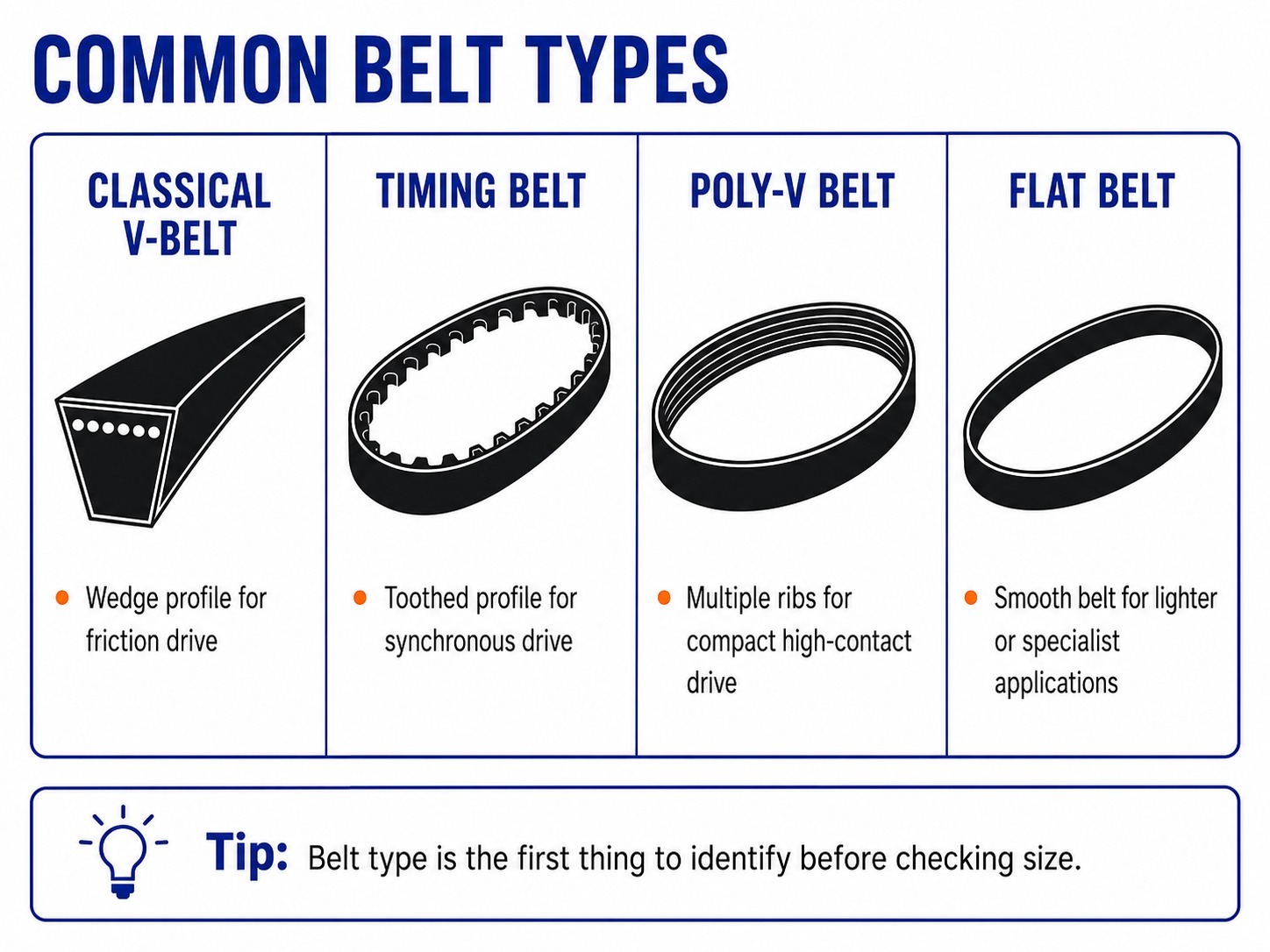
The first job is to identify what type of belt you have. Most belts will fall into one of these groups:
- V-belts - common on pumps, compressors, mowers, mixers and general drive systems.
- Wrapped V-belts - fabric-covered belts used for general power transmission.
- Raw edge or cogged V-belts - often used where better flexibility, grip or heat handling is needed.
- Poly-V belts - multi-ribbed belts used where a compact, high-contact drive is needed.
- Timing or synchronous belts - toothed belts used where the belt must keep accurate timing between pulleys.
- Variable speed belts - wider belts used on variable speed drive systems.
- Flat belts - smooth belts used on lighter or more specialist applications.
If the belt has teeth across the inside face, it is normally a timing or synchronous belt. If it has a wedge-shaped cross section, it is normally a V-belt. If it has several small ribs running around the inside face, it is likely a Poly-V or ribbed belt.
Check the Belt Profile
The belt profile tells you the cross-section size. This is one of the most important checks because two belts can have a similar length but completely different profiles.
Common V-belt profiles include:
- Z, A, B, C, D and E - classical V-belt sections.
- SPZ, SPA, SPB and SPC - narrow wedge belt sections.
- XPZ, XPA, XPB and XPC - cogged narrow wedge belt sections.
- 3V, 5V and 8V - narrow imperial wedge belt sections.
As a rough guide, an A section belt is wider than a Z section, a B section is wider again, and so on. Narrow wedge belts such as SPZ, SPA, SPB and SPC are designed differently, so they should not be guessed from appearance alone.
Measure the Width and Height
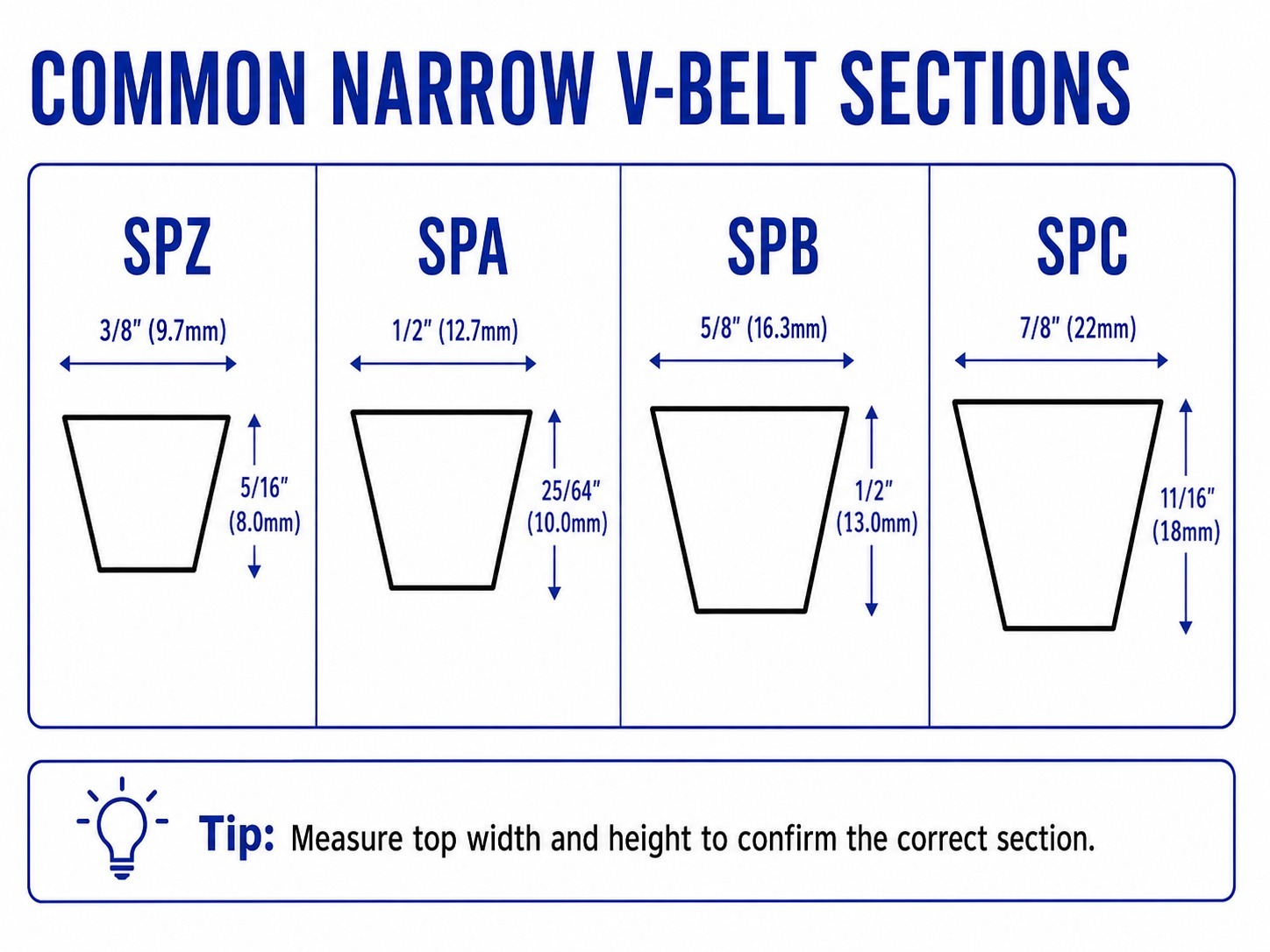
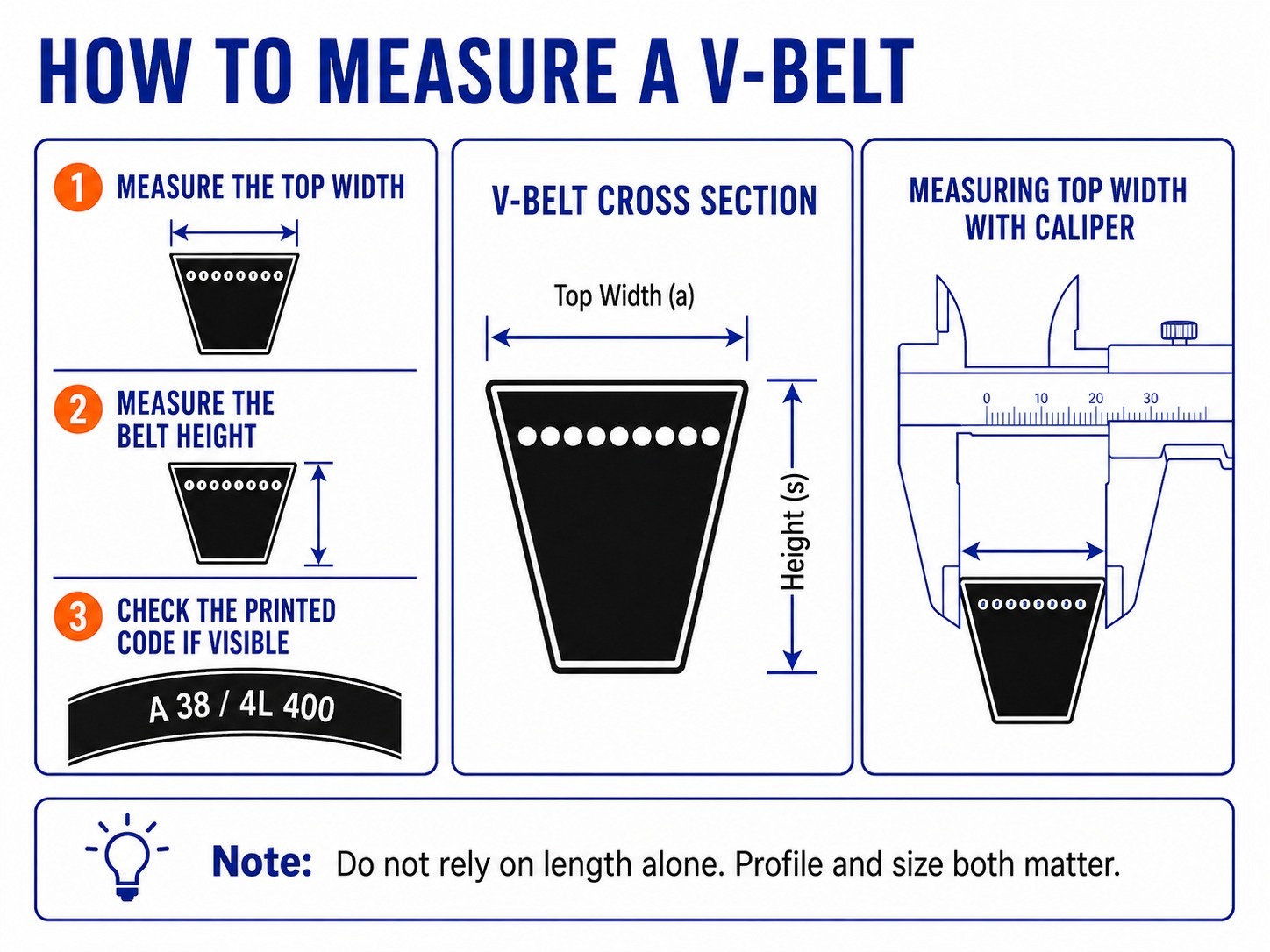
When identifying a belt, measure the top width and the belt height. On many belt charts these are shown as:
- a - the top width of the belt.
- s - the belt height or thickness.
For example, common narrow V-belt profiles include SPZ, SPA, SPB and SPC. These increase in width and height, so checking both measurements helps confirm the correct section before ordering.
Do not rely on a worn belt for a perfect measurement. Old belts can stretch, crack, polish, narrow or deform. If possible, check the machine manual, pulley type or old belt markings as well.
Look for Markings on the Belt
Most belts have printed markings on the outer face. These may include the profile, length, brand, pitch or construction type.
Useful examples include:
- A, B, C or Z for classical V-belts.
- SPZ, SPA, SPB or SPC for narrow wedge belts.
- AX, BX or CX for cogged V-belts.
- PJ, PK, PL, PM or PH for Poly-V belts.
- XL, L, H, XH, T5, T10, AT5, AT10, RPP5 or RPP8 for timing belts.
If the markings are still readable, take a clear photo before removing the belt. This gives you a useful reference if the belt breaks or the printed text rubs off during removal.
V-Belts vs Timing Belts
V-belts and timing belts are not interchangeable.
A V-belt relies on friction between the angled sides of the belt and the pulley. These are common on general drive systems where slight slip is acceptable.
A timing belt has teeth that mesh with a toothed pulley. These are used where the driven part must stay synchronised with the driving part. If the wrong pitch or tooth profile is fitted, the belt may jump, wear quickly or fail.
For timing belts, check the pitch carefully. Pitch is the distance from one tooth to the next. Common timing belt pitch sections include imperial types such as MXL, XL, L and H, and metric types such as T5, T10, AT5 and AT10.
When to Use a Cogged Belt
Cogged V-belts have cut-outs on the inside face. These help the belt flex around smaller pulleys and can improve performance in some drive setups.
They are often used where the belt needs better flexibility, heat dissipation or grip compared with a standard wrapped belt. Common cogged sections include AX, BX, CX and narrow wedge sections such as XPZ, XPA, XPB and XPC.
Do not swap a cogged belt for a standard belt without checking the application. The pulley setup, load and speed all matter.
Poly-V and Ribbed Belts
Poly-V belts have multiple small ribs running around the belt. They are used where a compact belt can transfer power across a wider contact area.
Common Poly-V sections include PJ, PK, PL, PM and PH. These letters refer to rib profile, not just belt length. You also need to count the number of ribs and check the belt length.
If a Poly-V belt has one rib missing, cracked ribs or shiny glazing, it is usually worth checking pulley alignment and tension as well as replacing the belt.
Variable Speed Belts
Variable speed belts are designed for variable speed transmissions. These belts are usually wider and are used where the pulley system changes the effective drive ratio.
Because they work differently to standard V-belts, the width, height and section need to match the machine setup closely. A near match can cause slipping, poor speed control or early wear.
Common Signs a Belt Needs Replacing
A worn belt is not always obvious until the machine starts slipping or losing drive. Look out for:
- Cracks across the belt.
- Frayed edges.
- Glazing or shiny sidewalls.
- Missing ribs or damaged teeth.
- Rubber dust around the pulley.
- Squealing under load.
- Loss of drive or poor tension.
- Uneven wear on one side of the belt.
If a new belt fails quickly, check the pulleys. Misalignment, damaged pulleys, incorrect tension or contamination from oil and grease can all shorten belt life.
Quick Belt Identification Checklist
Before ordering a replacement belt, check:
- The belt type: V-belt, timing belt, Poly-V, variable speed or flat belt.
- The profile or section, such as A, B, SPZ, SPA, XPZ, PJ, PK, T5 or AT10.
- The belt width and height.
- The length marking, if still visible.
- The tooth pitch if it is a timing belt.
- The number of ribs if it is a Poly-V belt.
- The pulley condition and alignment.
- The machine make and model, if available.
Need Help Finding the Correct Belt?
If you are not sure which belt you need, do not guess from length alone. A belt with the wrong profile may fit loosely, sit too high in the pulley, slip under load or wear out quickly.
Check the old belt markings, measure the belt section and confirm the machine model where possible. If the belt is badly worn or unreadable, pulley measurements and machine details can help narrow it down.
L&S Engineers supplies a wide range of belts, plant spares, service parts and workshop essentials for trade and plant hire use.


