


How to Identify a Zama Carburettor: Model Numbers, Markings and What to Check
How to Identify a Zama Carburettor
Zama carburettors are used on a wide range of small petrol engines, including chainsaws, strimmers, brushcutters, hedge trimmers, blowers and other handheld garden machinery.
If you need a replacement carburettor or repair kit, the first job is identifying the correct carburettor fitted to the machine. Two carbs can look very similar from the outside, but small differences in the model number, fuel pipe layout, throttle linkage or choke setup can mean they are not interchangeable.
This guide explains where to look, what the markings usually mean and what to check before ordering parts.
Start with the Model Number
The most useful marking on a Zama carburettor is the model number. This is the number you normally use when matching a replacement carburettor, gasket and diaphragm kit, or rebuild kit.
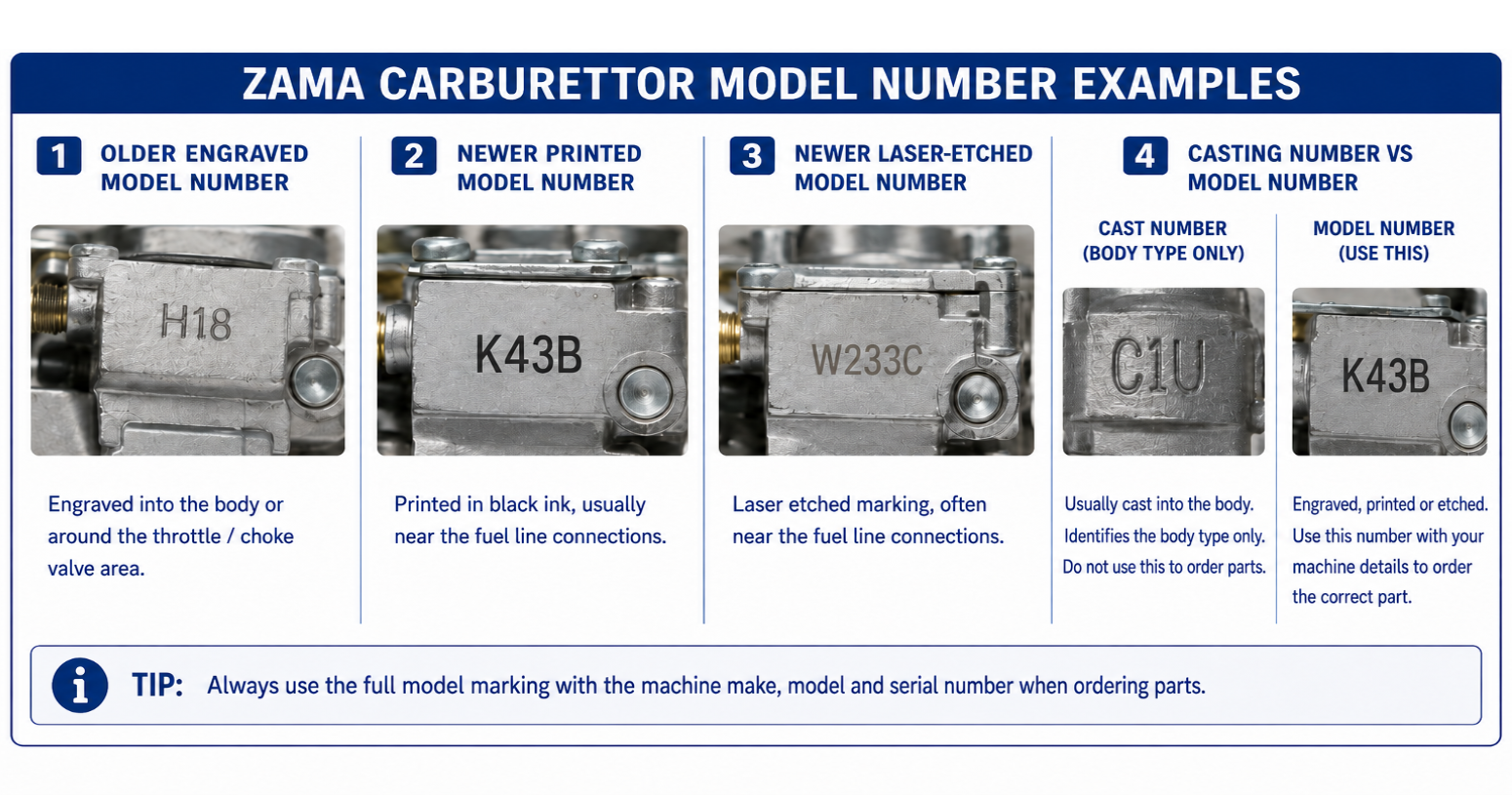
Depending on the age of the carburettor, the model number may be engraved, printed or laser etched. Older carburettors are often engraved into the body or around the throttle or choke area. Newer carburettors are more commonly printed or laser etched near the fuel line connections.
Do Not Confuse the Cast Number with the Model Number
One of the easiest mistakes is using the cast number instead of the model number. A cast number is normally raised into the metal body of the carburettor. It may show a code such as C1U, C1Q, C1M or C3.
That cast marking is useful because it identifies the carburettor body type or family, but it is not normally the full model number you need for ordering parts.
The model number is usually engraved, printed or etched onto the carburettor body. Examples include markings such as H18, K43B, W233C or RB-K85.
Tip: Use the full model marking with the machine make, model and serial number when ordering parts. Do not order from the cast body type alone unless the parts listing clearly confirms it.
Where to Look on a Zama Carburettor
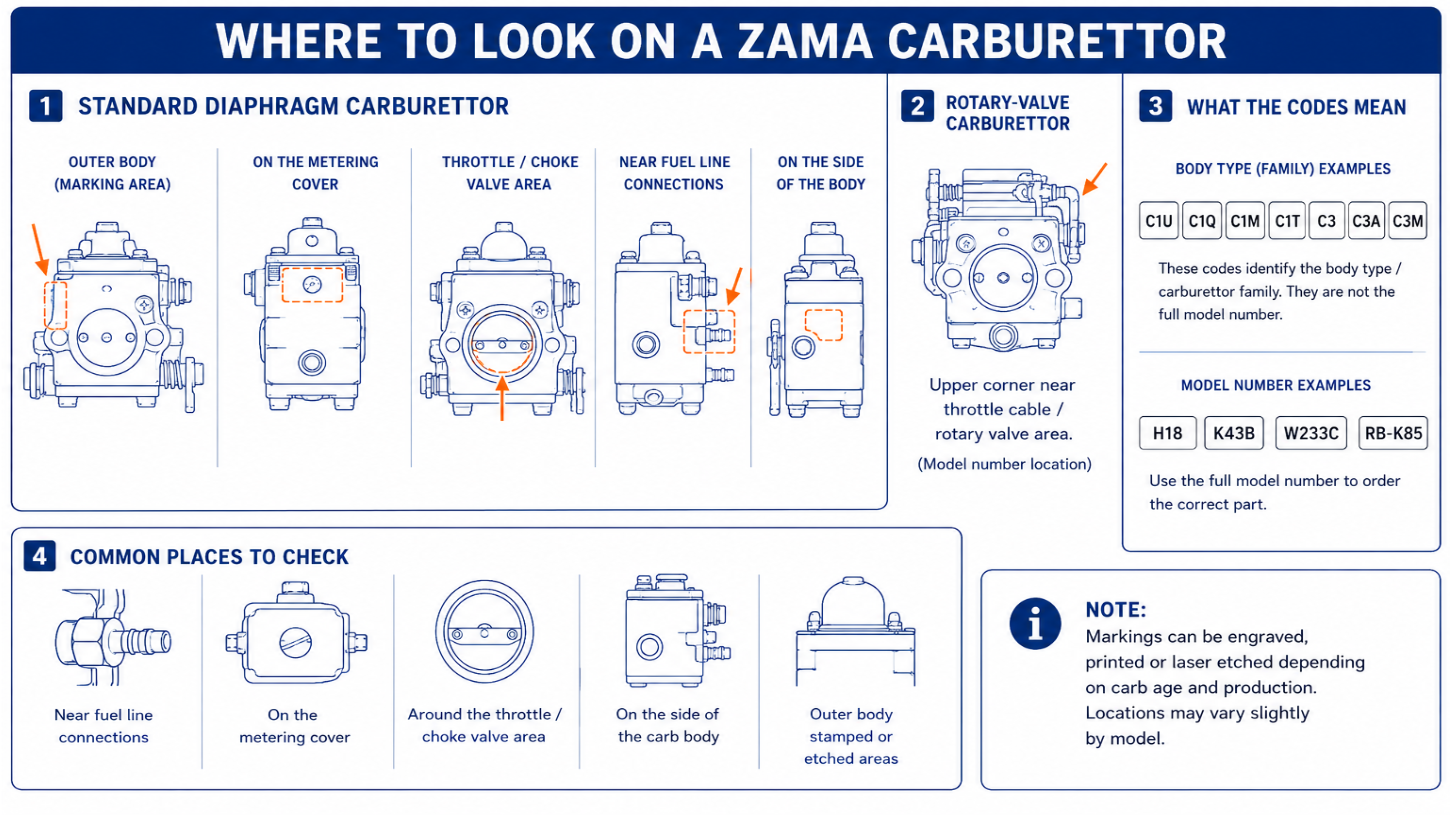
Zama carburettors are small, so the markings can be in a few different places. Use a clean rag and a good light, then check both sides of the carburettor carefully.
Common places to check include:
- Near the fuel line connections
- On the metering cover
- Around the throttle or choke valve area
- On the side of the carb body
- On the outer body, where markings may be stamped or etched
On rotary-valve carburettors, the model number may be in a different position, often around the upper corner near the throttle cable or rotary valve area.
Common Zama Body Type Markings
Some common Zama carburettor body type markings include:
- C1U
- C1Q
- C1M
- C1T
- C3
- C3A
- C3M
These codes are a useful starting point, but they should be used with the full model number and the machine details. A C1U carburettor, for example, may have several different model variants depending on the machine it was fitted to.
Check the Carburettor Against the Machine
The carburettor marking is the best starting point, but it should always be checked against the machine details before ordering. The same chainsaw, strimmer or blower range may have used different carburettors depending on the age, engine version or production run.
Make a note of the machine make, model and serial number where available. Then compare the carburettor itself, including the fuel pipe positions, throttle linkage, choke layout, primer connections and mounting holes.
This is especially important if the machine has been repaired before. A carburettor may look similar from the outside, but a small difference in the linkage or fuel connection can stop it fitting or running correctly.
Replacement Carburettor or Repair Kit?
Once you have identified the carburettor, the next question is whether you need a complete replacement carburettor or a repair kit.
A repair kit may be enough if the carb body is sound and the issue is caused by worn diaphragms, gaskets or service parts. This is common on small engines that have been left standing or have been run on old fuel.
A complete replacement carburettor may be the better option if the carburettor is damaged, badly corroded, heavily blocked, leaking from the body, or has already been repaired several times.
Fuel Problems Can Look Like Carburettor Problems
Many small engine running issues are fuel related. Old petrol, stale two-stroke mix, ethanol fuel, cracked fuel pipes and blocked filters can all cause poor starting or rough running.
Before blaming the carburettor, check the basics:
- Fresh fuel mix
- Clean air filter
- Good spark plug
- Clear fuel filter
- Sound fuel lines
- No obvious air leaks around the carb mounting area
This helps avoid replacing a carburettor when the real fault is elsewhere in the fuel system.
Quick Zama Carburettor Identification Checklist
Before ordering a carburettor or repair kit, make sure you have checked:
- The ZAMA name or branding on the carburettor
- The model number, such as H18, K43B, W233C or RB-K85
- The body type marking, such as C1U, C1Q, C1M or C3
- The machine make and model
- The machine serial number, if available
- The fuel pipe, primer, throttle and choke layout
- The gasket and mounting arrangement
If you are unsure, take clear photos of both sides of the carburettor before removing it fully. This makes it much easier to compare the linkage, pipe routing and markings later.
Need Help Finding the Right Carburettor?
If you are not sure which Zama carburettor or repair kit you need, make a note of the carb markings, machine model and serial number before searching. Clear photos of both sides of the carburettor can also help with identification.
You can browse our plant spares and small engine parts online, or get in touch with the machine details if you need help matching the correct replacement.


