



Honda GX160 Carburettor Fault Finding Guide
Honda GX160 Carburettor Fault Finding Guide
If your Honda GX160 engine starts badly, cuts out, runs unevenly, or only runs with the choke on, the carburettor is one of the first places to check.
Most GX160 carburettor problems come from stale fuel, dirt in the fuel bowl, a blocked main jet, or a restricted fuel passage. Here is a practical fault-finding process to help get the engine running properly again.
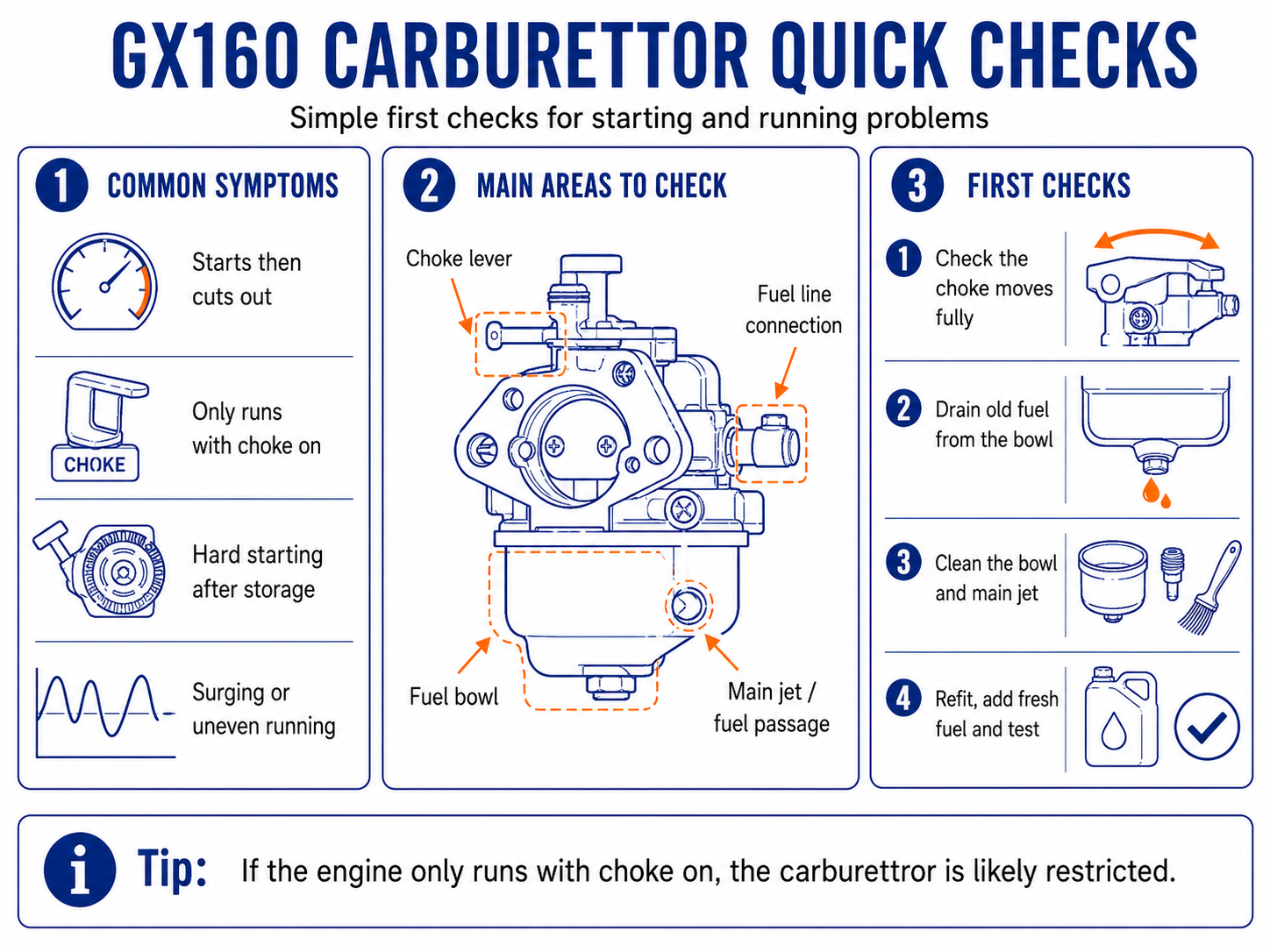
Common Signs of a GX160 Carburettor Problem
- The engine starts, then cuts out.
- The engine only runs with the choke on.
- The engine hunts, surges, or runs unevenly.
- The engine will not restart after storage.
- Fuel leaks from the carburettor bowl or drain screw.
If the engine has been standing for a while, old fuel should be high on the suspect list. Petrol can leave sticky deposits inside the carburettor, especially around the main jet and small fuel passages.
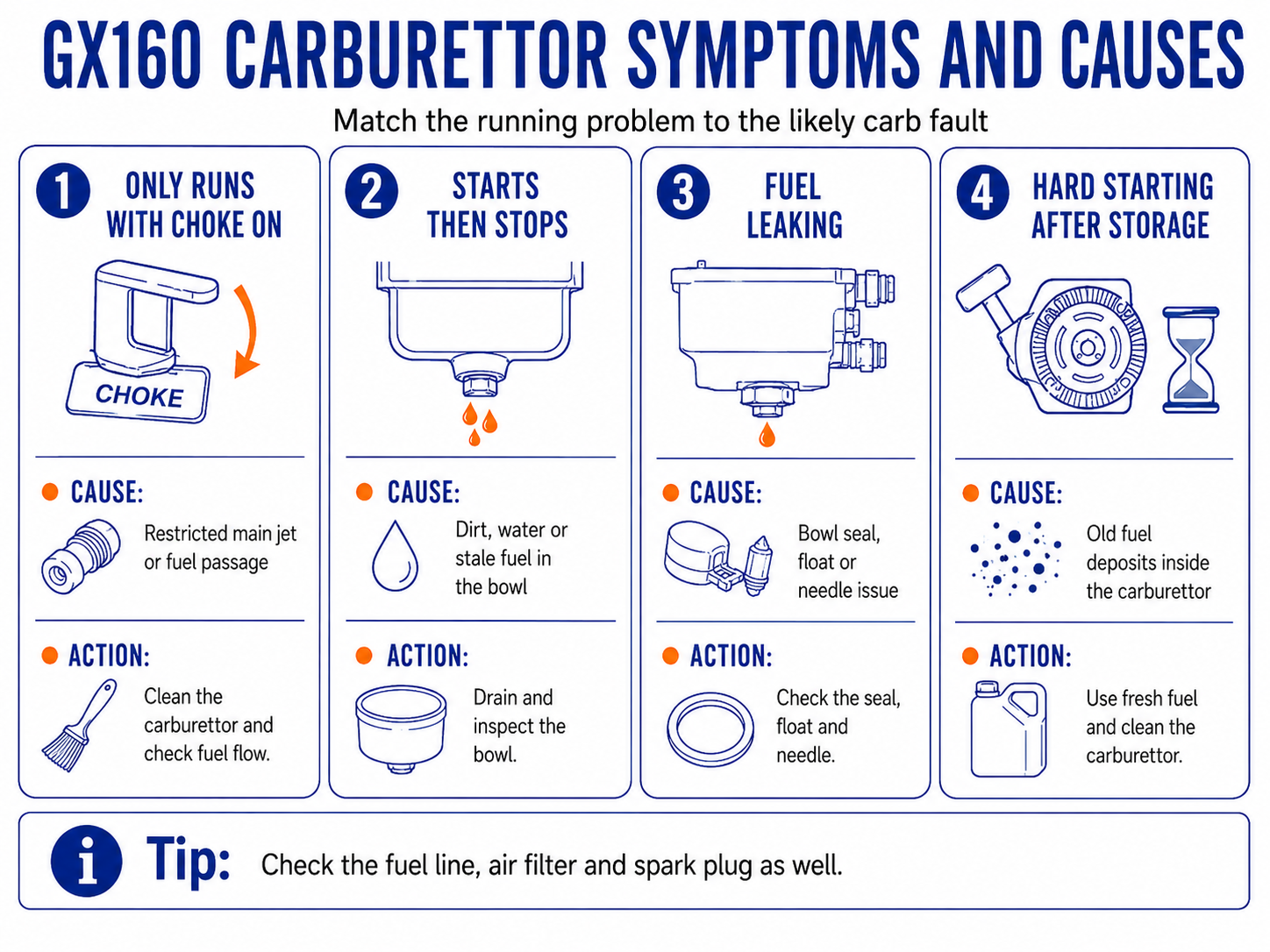
Quick Fault-Finding Table
| Problem | Likely Cause | First Check |
|---|---|---|
| Only runs with choke on | Blocked main jet or restricted fuel passage | Check choke movement, main jet and fuel passage. |
| Starts then stops | Dirt, water or stale fuel in the bowl | Drain the carburettor bowl and inspect the fuel. |
| Will not start after storage | Old petrol residue inside the carburettor | Drain old fuel, clean the bowl and check the jet. |
| Fuel leaking | Bowl seal, drain screw, float or needle issue | Inspect the bowl seal, drain screw, float and needle. |
Before You Start
Switch the engine off, let it cool, and work in a well-ventilated area away from sparks or flames. Turn the fuel tap off if fitted, use a suitable container to catch petrol, and wear eye protection when using carburettor cleaner.
1. Check the Choke Lever
Move the choke lever fully to the ON position and try to start the engine. If the engine starts with the choke on but stops when the choke is moved to OFF, the engine is probably not getting enough fuel through the normal running circuit.
Quick clue
If a GX160 only runs with the choke on, the choke is masking a fuel restriction. Check the carburettor before replacing ignition parts.
2. Check the Fuel
Before stripping the carburettor, check the fuel. If the petrol smells stale, looks dirty, or has been sat in the machine for months, replace it with fresh fuel.
If there is water or dirt in the tank, cleaning the carburettor alone will not solve the problem for long. Dirt can quickly be pulled back into the carburettor and block it again.
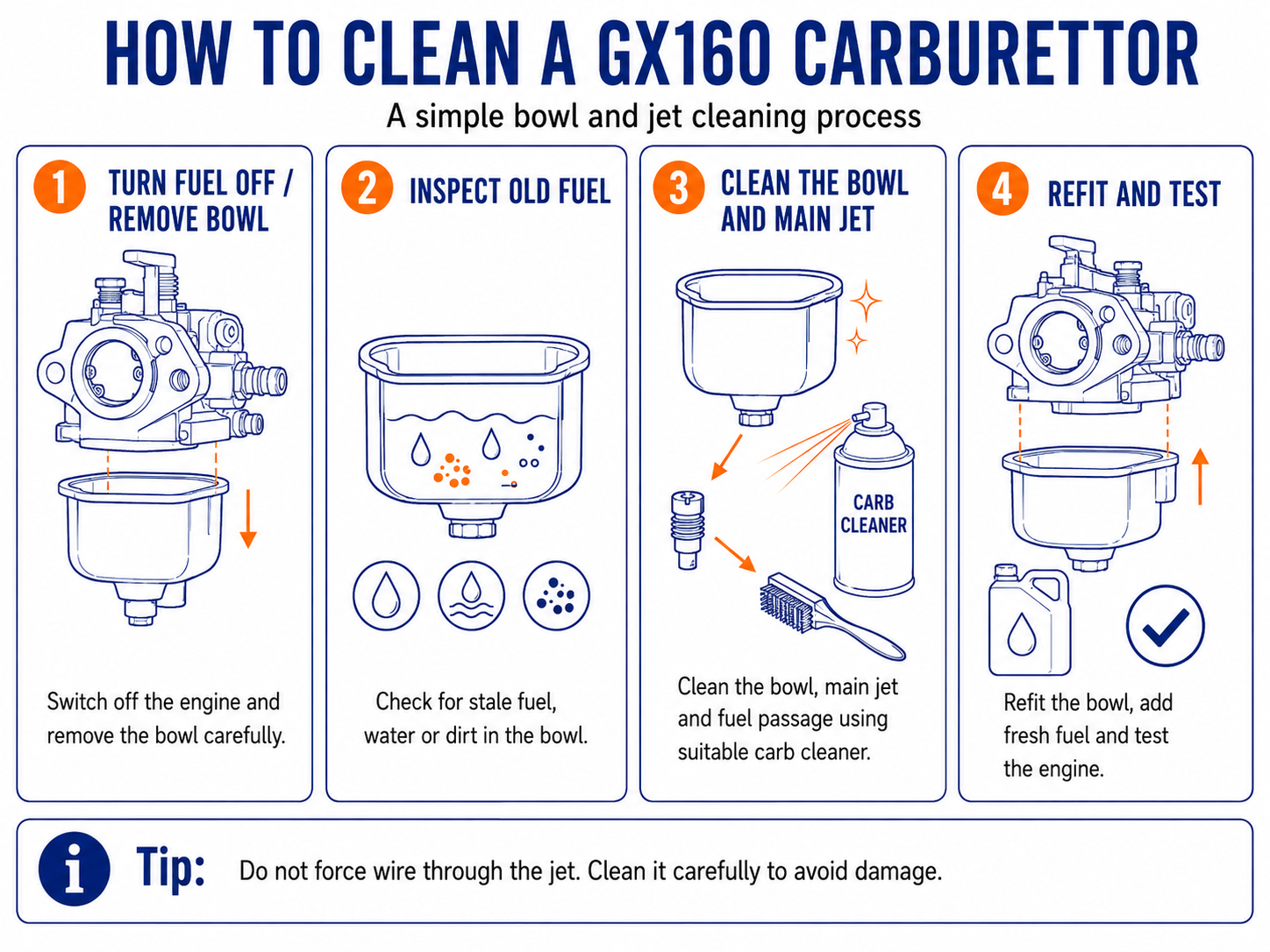
3. Drain the Carburettor Bowl
With the engine switched off, drain the carburettor bowl by loosening the drain screw or removing the bowl, depending on the carburettor condition and access.
Check the fuel for water, rust, dirt, sticky residue or a strong stale fuel smell. If the bowl is dirty, clean it before refitting.
4. Clean the Bowl, Main Jet and Fuel Passage
Remove the bowl and inspect it carefully. A small amount of dirt in the bottom of the bowl can be enough to block the main jet.
Clean the bowl, main jet and fuel passage with suitable carburettor cleaner. If using a cleaning kit, use the correct size cleaner and work carefully. Do not force oversized wire, drill bits or sharp tools through the jet, as this can damage it.
5. Check the Float and Needle
If the carburettor is flooding, leaking, or not refilling correctly, check the float and needle. The float should move freely, and the needle should be clean and undamaged.
A sticking float or worn needle can cause flooding, fuel leaks, poor running or fuel starvation.
6. Check the Fuel Line and Filter
If the carburettor is clean but the engine still struggles to run, check fuel flow from the tank. A blocked fuel cap vent, dirty fuel tap, restricted fuel pipe or blocked filter can all reduce fuel supply.
Replace cracked, hardened or damaged fuel pipe. Old rubber fuel lines can break down internally and send small particles into the carburettor.
7. Refit and Test
Refit the fuel bowl and seal carefully. Make sure the bowl sits squarely, the seal is correctly located, and the drain screw is secure.
Add clean, fresh fuel and start the engine with the choke on. As the engine warms up, move the choke gradually to OFF. The engine should continue running without hunting, surging or cutting out.
When Cleaning Is Not Enough
Cleaning is usually the first step, but replacement may be better if the carburettor body is corroded, the main jet is damaged, the float or needle is worn, the bowl seal will not stop leaking, or the engine still runs poorly after a proper clean.
Other Parts Worth Checking
Not every running fault is caused by the carburettor. If the carburettor has been cleaned and the issue remains, check the air filter, spark plug, fuel cap vent, fuel tap and engine oil level.
How to Prevent Future Carburettor Problems
- Use clean, fresh petrol.
- Do not leave old fuel in the machine for long periods.
- Drain the carburettor before long-term storage.
- Keep the fuel tank clean.
- Replace damaged fuel pipe.
- Service the air filter regularly.
Honda GX160 Carburettor FAQs
Why does my Honda GX160 only run with the choke on?
If a Honda GX160 only runs with the choke on, it usually means the engine is not getting enough fuel through the normal running circuit. A blocked main jet, dirty fuel passage, stale fuel or dirt in the carburettor bowl are common causes.
Why does my GX160 start and then cut out?
A GX160 that starts and then cuts out may have dirt, water or old petrol in the carburettor bowl. Drain the bowl, check the fuel condition and clean the carburettor if needed.
Can old petrol stop a Honda GX160 from starting?
Yes. Old petrol can leave sticky deposits inside the carburettor. These deposits can block the main jet and small fuel passages, causing hard starting, poor running or no start issues.
How do I know if the GX160 carburettor jet is blocked?
A blocked or restricted jet often causes the engine to run only with the choke on, surge, cut out, or fail to accelerate cleanly. Remove and inspect the bowl, then clean the main jet and fuel passage.
Should I clean or replace the GX160 carburettor?
Clean it first if the carburettor is dirty or blocked. Replace it if the body is corroded, the jet is damaged, the float or needle is worn, or the engine still runs poorly after cleaning.
What should I check before removing the carburettor?
Check the fuel level, fuel condition, choke movement, fuel tap, air filter and spark plug before removing the carburettor.
How can I stop GX160 carburettor problems happening again?
Use fresh fuel, avoid long-term fuel storage, drain the carburettor before storage, keep the tank clean, replace damaged fuel pipe and service the air filter regularly.
Final Check Before Returning the Machine to Work
Once the engine is running, let it warm up and check throttle response. Make sure it runs cleanly without needing the choke left on.
Check for fuel leaks around the bowl, drain screw and fuel pipe before the machine goes back into use.
Need Honda GX160 Parts?
If you need replacement spares, carburettor parts, filters or service items, you can search by model or browse our plant spares range.
Search Honda GX160 Parts Browse Plant Spares Open a Trade Account


