


Choosing the Right Washer: A Practical Guide
Choosing the Right Washer: A Practical Guide
Washers are easy to overlook, but they play an important part in getting a fixing right. The right washer can spread pressure, protect the surface, help resist vibration, or create a seal against oil, fuel, water or air.
Use the wrong washer and you can end up with damaged materials, loose fixings, leaks, or parts working loose over time.
This guide explains the main washer types, what they are used for, and what to check before choosing one.
What to Check Before You Choose
Before selecting a washer, start with the job it needs to do. Most washer choices come down to five key points:
- Washer type - Load spreading, locking, or sealing
- Fixing size - Must suit the bolt, screw, nut, or fitting
- Outside diameter - Controls how much pressure is spread
- Material - Affects strength, corrosion resistance, and sealing performance
- Application - Load, vibration, surface type, and working environment
Getting these basics right helps the fixing sit properly, hold securely, and last longer in use.
Load Spreading Washers
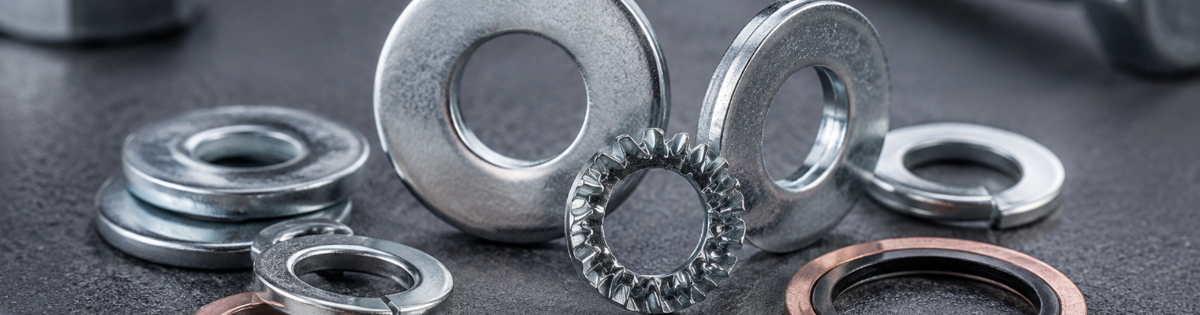
Flat washers are the everyday washers used under nuts, bolts and screws. Their main job is to spread clamping pressure across a wider area.
This helps protect the surface and stops the fixing from digging in, marking the material, or pulling through. They are especially useful on timber, thin sheet, plastics, painted surfaces and softer materials.
Common Types
- Flat washers - General-purpose washers for spreading pressure and protecting surfaces
- Form A washers - Standard metric flat washers for everyday fixing
- Form B and Form C washers - Used where different outside diameters are needed
- Table 3 and Table 4 washers - Common imperial washer types
- Penny, repair and mudguard washers - Larger washers used where extra support is needed
- Square plate washers - Heavy-duty washers often used with timber and structural fixings
As a simple rule, use a larger outside diameter washer when the material needs more support or when there is a risk of the fixing pulling through.
Locking Washers
Spring washers are used where vibration or movement could cause a fixing to loosen. They are common on machinery, guards, brackets, panels, workshop equipment and general repairs.
A locking washer does not replace correct tightening, but it can help keep the joint more secure when used in the right place.
Common Types
- Spring washers - Help maintain tension and resist loosening
- Internal lock washers - Teeth grip around the inside edge of the washer
- External lock washers - Teeth grip around the outside edge of the washer
- Dog tooth washers - Used where a stronger toothed locking action is needed
Spring washers are a common choice for general vibration resistance. Toothed washers are useful where the washer needs to bite into the surface to help resist movement.
Sealing Washers
Copper washers are used where the fixing also needs to stop leaks. You will often find them on engines, sump plugs, hydraulic fittings, fuel systems, pipework, pressure fittings and outdoor fixings.
Unlike a standard flat washer, a sealing washer is designed to compress, deform or bond against the surface to help create a seal.
Common Types
- Copper washers - Common for oil, fuel and heat-related sealing jobs
- Fibre washers - Used where slight compression helps create a seal
- Bonded washers - Metal washers with a rubber sealing insert
- Dowty washers - Bonded sealing washers often used on hydraulic and pressure fittings
- EPDM bonded washers - Useful for weather and water sealing
- Rubber O-rings - Used where a flexible seal is required
If you are replacing a sealing washer, match the original type where possible. The wrong washer material can cause leaks, especially with oil, fuel, air or hydraulic pressure.
Understanding Washer Size
Washer size normally follows the fixing size. For example, an M8 washer is designed to suit an M8 bolt or screw.
The three measurements to check are:
- Inside diameter - The hole size, which must fit the fixing
- Outside diameter - The overall width of the washer
- Thickness - Affects spacing, strength and support
The inside diameter needs to match the bolt, screw or fitting. The outside diameter depends on how much support the job needs.
Material and Finish Options
The washer material affects how it performs. Some washers are chosen for strength, some for corrosion resistance, and others for sealing.
Common Materials
- Zinc plated steel - Good for general workshop and indoor use
- Stainless steel - Better for outdoor, wet or corrosive conditions
- Copper - Used for sealing, especially around oil, fuel and heat
- Fibre - Used where controlled compression is needed
- Rubber / EPDM - Used for flexible sealing and weather resistance
For general fixing, zinc plated or stainless steel washers are usually the main options. For sealing jobs, the washer must suit the fluid, pressure and temperature involved.
Choosing the Right Washer for the Job
The easiest way to choose a washer is to focus on what problem it needs to solve.
- Spreading load - Use a flat, Form A, Form C, penny, repair or square plate washer
- Protecting a surface - Use a suitable flat washer under the fixing
- Supporting thin material - Use a larger outside diameter penny, repair or mudguard washer
- Resisting vibration - Use a spring washer, internal lock washer, external lock washer or dog tooth washer
- Sealing oil, fuel, water, air or weather - Use a copper, fibre, bonded, Dowty, EPDM bonded washer or rubber O-ring
This is where many fixing problems start. A washer should be chosen for the job it needs to do, not just because it fits the bolt.
Quick Summary
- Use flat and repair washers to spread pressure and protect surfaces
- Use larger outside diameter washers for thin, soft or damaged materials
- Use locking washers where vibration or movement could loosen the fixing
- Use sealing washers where oil, fuel, water, air or weather needs to be sealed out
- Match the inside diameter to the fixing size
- Choose the right material for strength, corrosion resistance or sealing performance
If you are unsure, check the washer you are replacing and match the type, size and material as closely as possible. A correctly chosen washer helps the fixing sit better, hold longer, and prevents avoidable problems later on.
You can browse our full range of washers here Open a Trade Account


